
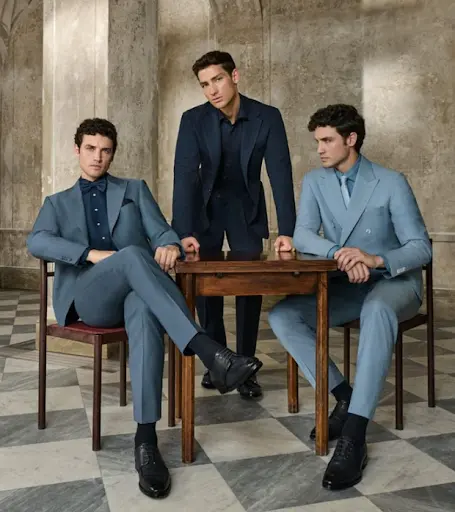
Matching a suit and tie comes down to three checks: contrast, colour temperature, and texture. Get those right and almost any pairing works. This guide gives you combinations that never miss, starting from the suits you already own, or from the business suits for men that Dubai wardrobes are built on.
Start With the Suit, Not the Tie
Silk slips and shines, so it favours soft shapes like the puff. Linen and cotton hold creases, so they favour sharp, architectural shapes. The square also carries more of the outfit’s personality than it used to: in a 2022 YouGov survey, 92% of Britons said it is acceptable for men to skip the tie at the office.
That figure matters because when the tie goes, the pocket square fold becomes the detail people actually read. Buy one white linen square first, since it works with everything and folds crisply. Cotton sits between the two, cheaper than silk and softer than linen, which makes it a fair second purchase. Add silk once the first two have earned their keep.
Suit and Tie Pairings That Always Work
Some pairings survive every season and every meeting. Start with these, then adjust for your colouring and the occasion.
- Navy suit with a burgundy tie: the classic contrast, warm against cool.
- Navy suit with a silver-grey tie: cooler and more formal, right for evening events.
- Mid-grey suit with a navy tie: the reliable office default.
- Mid-grey suit with a forest green tie: quieter than burgundy, still warm.
- Charcoal suit with burgundy or rust: depth against depth, kept apart by temperature.
- Tan or light brown suit with olive or rust: earth tones for daytime and outdoor events.
Notice the pattern: the tie is always clearly darker or clearly lighter than the suit, never a near-miss of the same shade. Near-misses read as accidents, and contrast reads as intent.
Black Suit Tie Combination Rules
Black is the hardest base because almost everything shouts against it. A black suit tie combination works best in one of three lanes: silver or charcoal for formal evenings, deep burgundy for dinners, or a black-on-black texture play when the dress code is strict. Skip bright novelty colours, which glow against black.
If the wardrobe leans black because of evening work, build contrast with texture: matte wool against satin lapels, or a knitted tie against smooth cloth. Save black itself for evening events, and let navy carry the office week.
Texture and Pattern Do the Quiet Work
Colour gets the attention, but texture decides whether a pairing looks considered. Silk satin reads formal and shiny, grenadine and knitted silk read textured and modern, and wool ties read cold-weather and casual. When suit and shirt both carry pattern, change the scale between them and keep the tie plainer.
One patterned piece per outfit is the safe ceiling; two takes practice, and three is a costume.
If in doubt, make the tie the plainest thing you wear. A textured solid tie upgrades almost any suit and tie outfit without adding risk.
When to Skip the Tie Entirely
A suit without tie is now standard in most Dubai offices and restaurants, and it works when the shirt collar can stand on its own. Choose a collar with structure, open one button only, and let a pocket square or a good watch carry the detail. For black tie, the question reverses: a suit and bow tie is not the same thing as a dinner suit, so when the invitation says black tie, wear the real thing.
Our guide to men’s suits in Dubai covers dressing the wider week, tie or no tie. The open collar is a style choice, not an escape hatch, and it still needs a pressed shirt to work.
Atelier Notes: Collars, Lapels, and the Knot
At Vogue Atelier, the tie conversation starts before any tie is bought, because collar and lapel decisions set what will sit well. Shirt collar and cuff shapes are chosen at consultation, and a collar with enough height and spread carries a four-in-hand cleanly. Lapel width is set on the pattern, which fixes the tie width that will look balanced against it.
Clients building a first tailored wardrobe are pointed toward navy and mid-grey bases for exactly the pairing reasons above. The tie is the last decision, not the first.
Who These Rules Suit, and When to Ignore Them
These rules exist for men who want to look right without thinking hard, at work, at weddings, and at dinners where the room notices. If you work in fashion or the creative industries, break them on purpose, because clashing deliberately is a skill and a signal. If your workplace runs a strict dress code, the code wins.
Climate counts as context too, since Dubai daytime favours lighter suits and softer contrast, while evenings carry the darker pairings above. Rules of thumb serve the man with five ties, not the man with fifty.
The Knot at the End of It
Contrast, temperature, texture: run the three checks and the morning decision takes seconds. A tailored base makes every tie look better, because the collar and the shoulder line do most of the visible work. Call or WhatsApp +971 54 305 0458 to have that base cut properly, email hello@vogue-atelier.com with any pairing question, or contact Vogue Atelier to book a consultation.