
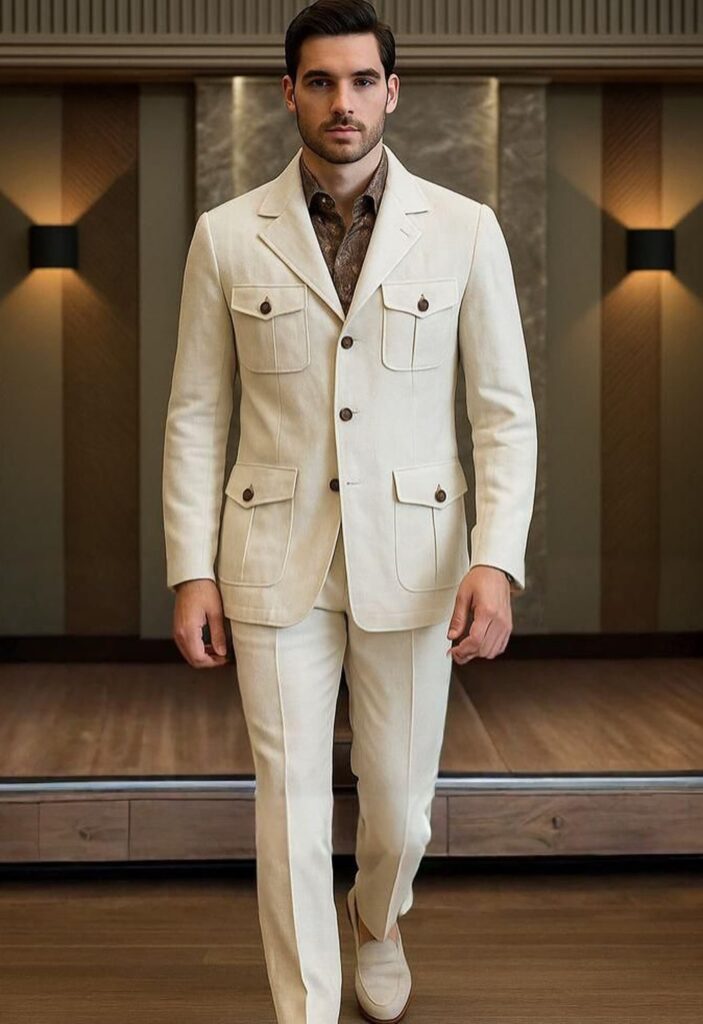
A bespoke suit is constructed from scratch using a hand-drafted pattern unique to one person’s body. Unlike off-the-rack or made-to-measure options, bespoke tailoring starts with the individual, not a standard block. The process involves a consultation, fabric selection, individual pattern drafting, and two to four fittings. Men choose bespoke suits for precision fit, durability, comfort aligned with posture and movement, and complete personalization. Costs typically range from $1,500 to $6,000 depending on tailor and cloth. With proper care, a bespoke suit lasts 15 to 20 years. Best suited for professionals, grooms, frequent wearers, and men with non-standard proportions.
What Is a Bespoke Suit? The Direct Answer
If you have been trying to understand what separates a bespoke suit from everything else, here it is: a bespoke suit begins with a pattern cut specifically for your body. Not adjusted. Not altered after the fact. Built from a blank sheet of paper, around your measurements, your posture, and the way you actually stand and move through the day.
Off-the-rack luxury suits are designed for an average body that, in practice, barely exists. Made-to-measure closes some of the gap but still starts from a pre-existing template. Bespoke begins at a different point entirely. That distinction matters more than price, fabric, or label alone.
Off-the-Rack vs Made-to-Measure vs Bespoke: What Actually Changes?
Here is a comparison most clothing guides oversimplify:
| Feature | Off-the-Rack | Made-to-Measure | Bespoke |
|---|---|---|---|
| Starting point | Standard block | Modified block | Individual pattern |
| Fit accuracy | Generic | Improved | Precise |
| Fittings included | None | 1 (sometimes) | 2 to 4+ |
| Fabric selection | Limited | Moderate | Extensive |
| Construction method | Machine-made | Semi-machine | Hand-stitched |
| Typical turnaround | Immediate | 4 to 8 weeks | 8 to 16 weeks |
| Price range | $200 to $800 | $800 to $1,800 | $1,500 to $6,000+ |
| Expected lifespan | 3 to 5 years | 5 to 8 years | 10 to 20 years |
A high-end made-to-measure suit from a luxury house can cost as much as entry-level bespoke. The gap isn’t always price. It is process, and where that process starts.
Learn More About: Everything You Need to Know About Bespoke Suits for Men
How Does the Bespoke Tailoring Process Actually Work?
The bespoke tailoring process is a carefully structured journey that transforms individual measurements, preferences, and lifestyle needs into a garment designed exclusively for one wearer. From consultation and fabric selection to pattern drafting and multiple fittings, each stage contributes to achieving exceptional fit, comfort, balance, and personal expression. Understanding how the process works helps explain why bespoke tailoring remains the highest standard in men’s suiting.
What Happens During the First Consultation?
The consultation is not a shopping appointment. It is a conversation. A good tailor will ask how you actually wear a suit: do you sit most of the day, travel by air frequently, attend formal dinners? Your daily movement shapes how the garment is cut. Shoulder slope, posture, dominant hand, even how you carry weight when standing still get factored in. Some tailors take 30 measurements or more at this stage. That sounds excessive until you’ve worn something built to those numbers.
How Do You Choose the Right Fabric for a Bespoke Suit?
Fabric selection happens at the consultation or closely after. A tailor worth visiting will walk you through cloths from mills like Dormeuil, Scabal, or Loro Piana, discussing weight, weave, and drape rather than just colorways. For a business suit, wool between 280 and 320 grams per square meter works across most climates. For events, a lighter Super 120s or Super 130s gives a cleaner hang. The choice isn’t purely visual. You can feel the difference between a stiff fused lining and a soft floating canvas the moment you hold them side by side.
What Is Pattern Drafting and Why Do Fittings Matter?
After measurements, a pattern is drafted by hand, unique to you. Many tailors create a toile first, a test garment in inexpensive cloth, so the shape can be reviewed before touching the real fabric. The first fitting catches structural issues. The second refines them. By the third, most tailors are correcting details only visible to someone who knows exactly where to look. This is where bespoke earns its name. You are not trying on something close. You are watching something become specific to you.
What Are the Real Benefits of a Bespoke Suit?
The benefits are not abstract. They appear in specific, physical ways. Fit is the obvious one. A suit built around your posture hangs differently than anything off a rack. Jackets stop pulling across the back when you extend an arm. Trouser breaks land where they should. Chest buttons close without distorting the front. Comfort is the one most men underestimate. When the shoulder seam sits exactly where your shoulder ends, you stop adjusting throughout the day. Most men don’t notice how much time they spend managing an ill-fitting suit until they no longer need to.
Longevity rounds it out. With proper care, a well-constructed bespoke suit outlasts five or more seasons of off-the-rack wear. The floating canvas construction, the hand-stitched buttonholes, the generous seam allowances built in for future alterations, these are not luxury touches. They are structural decisions.
Who Should Actually Consider Bespoke Tailoring?
| Profile | Why Bespoke Makes Sense |
|---|---|
| Business professionals | Worn daily; fit directly affects presence and sustained comfort |
| Grooms | Once-in-a-lifetime occasion that photographs permanently |
| Men with non-standard proportions | Sloped shoulders, short torso, unequal arm length |
| Frequent travelers | Durability and versatility justify the higher upfront cost |
| Long-term wardrobe builders | Cost-per-wear logic shifts significantly over 15 years |
If you wear a suit fewer than ten times a year, bespoke is probably not your next step. But if a suit is part of how you show up professionally week after week, the math starts working differently.
How Much Does a Bespoke Suit Cost and How Long Does It Take?
Prices shift considerably by tailor, city, and cloth selection.
| Category | Price Range | Typical Timeline |
|---|---|---|
| Entry-level bespoke | $1,500 to $2,500 | 8 to 10 weeks |
| Mid-range bespoke | $2,500 to $4,500 | 10 to 14 weeks |
| High-end or Savile Row | $5,000 to $10,000+ | 12 to 20 weeks |
The longer timeline isn’t padding. Fittings take time. The cloth needs to settle between sessions. Rushing a bespoke suit is how you end up with something that fits at the third fitting but reads wrong two months later. The process needs the time it takes, and that’s not a flaw.
How to Spot a True Bespoke Tailor Before You Commit
This is where buyers get misled. “Bespoke” is used loosely by businesses offering what is, in practice, heavily customized made-to-measure. A genuine bespoke tailor will draft a pattern from scratch for each client rather than modify an existing block. They will schedule at least two fittings before completion, with a basted first fitting in the actual cloth. The jacket will be constructed with a floating canvas, not a fused interlining. Press your hand flat against the chest of the jacket. Two layers moving slightly together indicate canvas. Stiff and bonded means fused. They will also ask about your body and lifestyle before asking about preferences. That order matters.
A Suit That Fits Isn’t a Luxury. It’s a Standard Worth Setting.
Most men have worn a well-fitted suit at some point. Maybe rented, maybe borrowed. And they remember how it felt. There’s something specific about wearing something that doesn’t fight you. That experience isn’t reserved for rare occasions or exceptional budgets. It’s what bespoke tailoring produces reliably, for men who are ready to invest in it properly.
The next step is simpler than it sounds. Start with a consultation. Ask the tailor how they draft patterns. Listen to what they ask you in return. That conversation tells you more about the quality of their work than any fabric swatch or price list will.
Contact us today to schedule your consultation and begin the process.
You May Also Like: Wedding Suit Trends for Men | From Classic to Modern Styles
Frequently Asked Questions About Bespoke Suits for Men
How Many Fittings Does a Bespoke Suit Involve?
Most bespoke tailors schedule two to four fittings depending on garment complexity and how the cloth is responding. The first fitting, often in a basted state, checks overall shape and proportion. Subsequent sessions refine the shoulder, the balance, the silhouette. Some clients need a fourth fitting if significant corrections come up mid-process. If a tailor tells you one fitting is enough for a fully bespoke suit, that’s worth questioning before you proceed.
Is Bespoke Tailoring Better Than Made-to-Measure for Most Men?
For most, yes, though the practical gap depends on the specific tailor and the specific body. Made-to-measure modifies a pre-existing block; bespoke creates a new pattern from nothing. The difference shows most clearly on men with non-standard proportions: notably unequal shoulders, a short rise, or a torso that doesn’t match jacket sizing conventions. Made-to-measure handles minor variations reasonably well. Bespoke handles the ones that have always been a problem, without requiring post-delivery alterations just to make it wearable.
What Fabric Should I Choose for My First Bespoke Suit?
Start with a mid-weight plain-weave wool, somewhere between 270 and 310 grams per square meter. Navy or charcoal. Not a pattern. A plain navy suit photographs well, travels without drama, and reads correctly across business meetings and formal dinners. Patterns narrow your occasions before you’ve even worn it twice. A herringbone is beautiful. You’ll reach for the navy three times as often. Once you’ve seen how the tailor works and what that cloth does on your body, the second commission is the right place to explore something more specific.
How Long Will a Bespoke Suit Actually Last?
With reasonable care, 15 to 20 years is realistic. That assumes rotating it with other suits so the fabric can rest between wears, using a proper shaped hanger, and brushing the cloth after wear rather than sending it to the dry cleaner after every use. Dry cleaning more than once or twice per year strips the fabric faster than most people expect. Men who commission a bespoke suit in their thirties often still wear it in their fifties. The fabric develops character over time. A well-made structure holds regardless.
How Do I Know If My Bespoke Fitting Is Going Well?
By the second fitting, the suit should feel recognizably yours. Not finished, but directionally right. If the shoulder placement still feels uncertain at the second session, or the chest balance is still being debated openly, the process is running behind where it should be. A good tailor tells you clearly what they are correcting between each fitting and why. If that explanation isn’t coming, that’s information. Fittings should feel like measured progress, not open experimentation. I’ve seen situations where a client accepted vague reassurances through three fittings and received a suit that needed significant rework on collection day. Clarity at each stage is the sign to look for.