
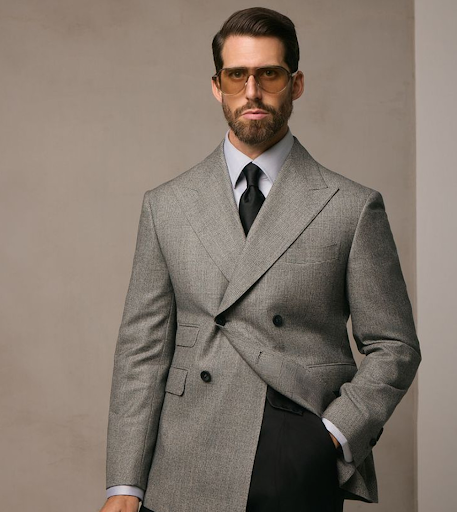
The short answer to bespoke vs made to measure suits is this. A bespoke suit starts from a blank pattern drawn for your body alone, while a made-to-measure suit adjusts an existing pattern to your measurements.
That one difference decides almost everything else: the fit, the fittings, the wait, and the cost. This guide walks through what each term means, how the processes compare, where the money goes, and which path your body and calendar are pointing to.
What Bespoke Means
Bespoke is tailoring from zero. Nothing exists before you walk in.
The cutter measures you, studies your posture and stance, and draws a paper pattern that belongs to you alone. Chalk meets cloth only after that pattern is right, and the pattern stays on file for every suit that follows.
The garment is then built through fittings. At each one, the suit is taken apart a little, corrected, and put back together closer to your shape.
Hand work matters here for more than romance. Stitches sewn by hand hold a small amount of give, letting the chest and lapels shape themselves to your body over months of wear.
The first of these fittings is called a baste, and it surprises most first-time clients. The jacket arrives held together with loose white stitches, half-finished on purpose, so the cutter can open seams on your body and move cloth where your frame asks for it.
The Savile Row Bespoke Association, the trade body that still guards the term today, defines a bespoke suit as one cut by an individual from a pattern drawn for that customer, with a minimum of 50 hours of hand work and a series of fittings. That figure shows how much human labour sits inside a true bespoke garment, and why the word should never describe a suit pulled from a rack.
The result follows your body rather than a standard idea of it. A dropped shoulder, a straight back, a full seat: the pattern absorbs all of it, which is why the bespoke suits for men Dubai clients commission from us begin on paper, not on a mannequin.
What Made-to-Measure Means
Made-to-measure starts with a base pattern that already exists. The tailor takes your measurements, then alters that base to suit you. Typical adjustments include:
- Longer or shorter sleeves and trouser legs
- A trimmer or fuller waist and seat
- A higher or lower button stance
- Your choice of lapels, linings, buttons, and trouser style
This is a real step up from off-the-rack, and our overview of made to measure suits in Dubai covers the service in depth. The suit is made for you after you order it, in your cloth, with your decisions throughout.
What it cannot do is redraw the foundations. If your posture sits outside the base pattern’s assumptions, alterations can only chase the problem, never remove it.
For many men that trade is fair, because their build sits close to standard and their diary cannot hold several fittings. Know the ceiling of the service, and you will never be disappointed by it.
Made-to-measure also shines as a first commission. It teaches you your preferences, from lapel width to trouser rise, so a later bespoke commission starts with better answers.
Bespoke vs Made to Measure Suits: Process and Timeline Differences
The two processes feel different from the first appointment. Here is each journey, step by step.
The Bespoke Journey
Bespoke moves through five stages, and none can be skipped. Each one exists to make the next more exact.
- A long consultation with full measurement and posture study
- A pattern drafted from scratch, then cloth cut by hand
- A basted first fitting, where the suit is still a stitched shell
- One or two further fittings as the garment tightens toward your shape
- Hand finishing of buttonholes, edges, and the final press
The suit is measured in weeks because every stage waits on the one before it. Fittings are where the fit is made, so skipping them defeats the point.
Most clients name the basted fitting as the stage they remember, because it is the moment the suit visibly becomes theirs.
The Made-to-Measure Journey
Made-to-measure runs shorter because the groundwork already exists. The stages look like this.
- Consultation and measurement
- Alterations applied to the base pattern
- The suit cut and sewn in one run
- A single fitting for final tweaks at delivery
The wait is shorter because the pattern work already exists. Fewer hands touch the garment, and fewer decisions stay open along the way.
Neither path should ever feel rushed, and a tailor promising either garment in a day is telling you how little of it will be made for you. Patience is not a flaw in this craft; it is the method.
How Each Fit Reads on the Body
The finished garments differ in ways you can see across a room. Learn the signals once and you will spot them everywhere.
A bespoke coat sits flat at the collar with no gap or ripple, because the pattern was drawn for that exact neck and shoulder. The balance from front to back matches the wearer’s stance, so the jacket hangs still as he moves.
Made-to-measure lands close on most of these points and misses quietly on the hardest ones. A slight collar gap, or a chest that bows when the arm lifts, is the usual trace of a base pattern underneath.
Neither trace makes a suit bad, and many wearers never notice them. The point is to know what your money buys at each tier, so the choice is made with open eyes.
Trousers tell the same story lower down. Bespoke trousers hang from the waist in one clean line, while adjusted patterns often crease at the hip or break unevenly at the shoe.
Price Positioning
Bespoke sits above made-to-measure, and the gap is explained by labour. A drafted pattern, dozens of hours of hand work, and multiple fittings cost more to deliver than adjustments to an existing block.
Cloth moves the number in both services, often more than the service itself. The same fabric books are usually open to both, so a fine cloth in made-to-measure can cost more than a modest cloth in bespoke.
Trims move the total too, though less than clients expect. Horn buttons, a silk lining, or working cuffs each add real cost in materials and minutes, and a good quote shows them as choices rather than surprises.
We keep this guide free of figures on purpose, because every commission is quoted on its own cloth and construction. A consultation gives you an exact answer for your exact suit, which is the only number worth having.
The Wardrobe View: Thinking Past the First Suit
Most men are not buying one suit; they are starting a wardrobe. That longer view changes the arithmetic between the two services.
A bespoke pattern is an asset that compounds. Each commission refines it, so the third suit fits better than the first and takes fewer fittings to get there.
Made-to-measure carries less forward, since the base pattern belongs to the maker rather than to you. It remains a fine way to fill gaps quickly, a travel suit here, a summer jacket there, around a bespoke core.
Many of our clients run exactly that mix. The wardrobe grows faster, and every garment still earns its place.
Which Suit Type to Choose, and Why
Choosing comes down to your body, your diary, and what the suit must do. These signals settle most cases quickly.
Choose bespoke if any of the following describe you. More than one is a strong signal:
- Your proportions sit outside standard patterns
- You wear tailoring often enough to feel the difference daily
- The suit marks an occasion that must be right from the first hour
- You are building a wardrobe over years, since the stored pattern improves with every commission
Choose made-to-measure if these fit better. Any one of them is reason enough:
- Your build is close to standard proportions
- Your date is nearer than a full commission allows
- This is your first step past ready-made and you want to learn the process gently
Think also about how you feel toward the process itself. Some men love the fittings, the cloth books, and the slow shaping of a garment, while others want the result without the ritual.
There is no wrong door here, only a wrong match, and any custom suits Dubai comparison should start with the wearer rather than the price list. When the service matches the man, either garment will serve him well for years.
If you are still torn after all of this, let the occasion decide. A milestone deserves bespoke; a deadline deserves made-to-measure; a full wardrobe deserves both in turn.
Who Should Go Bespoke, and Who Shouldn’t
Honesty helps more than persuasion here. Bespoke is for the man who values fit above speed, enjoys the making as much as the wearing, and will use the suit enough to justify the hours inside it.
Leave bespoke alone if your event is only weeks away, if the suit will hang unworn between rare occasions, or if fittings feel like a chore rather than a pleasure. Made-to-measure, or a well-altered ready suit, will serve you better and cost you less.
There is a third honest case: the man between sizes after a training year or a big life change. Wait until the body settles, then commission, because a pattern drawn mid-change is out of date by delivery.
Coming back to bespoke later stays open to you always. A good tailor will say this to your face, and the one who does is the one to trust.
The Difference Between Bespoke and Made to Measure, Settled
Strip away the marketing, and the difference between bespoke and made-to-measure is simply where the pattern comes from. One is drawn for you; one is adjusted for you, and everything else flows from that single fact.
If you want to go deeper before deciding, read everything you need to know about bespoke suits and come armed. Then let your body make the decision, because it is the only judge that never flatters.
Price will try to make the decision for you, in both directions. Resist it long enough to match the process to your body first, and the money will land where it should. Fit outlasts every invoice.
Speak with Vogue Atelier and we will measure you, walk you through both paths, and tell you plainly which one fits your life. The consultation carries no obligation, at either atelier or through the Moving Tailor at your home or office. The right suit starts with the right conversation.
Frequently Asked Questions About Bespoke and Made-to-Measure
Can I start with made-to-measure and move to bespoke later?
Yes, and many clients do exactly that. Your measurements and preferences carry over, which makes the first bespoke commission smoother.
How long does a bespoke pattern stay usable?
For years. The atelier updates it at each commission, so it evolves with your body rather than expiring. Long-term clients often keep the same pattern in service for decades.
Is bespoke only for formal suits?
No. Bespoke covers everyday tailoring, odd jackets, trousers, and casual cloth. The method serves any garment that must fit well.
Can I bring a suit I already love as a reference?
Yes. A well-fitting garment tells the cutter a great deal about the balance and ease you prefer, and it shortens the conversation. Bring the trousers as well, since rise and drape carry half the story.
What happens if my weight changes after the suit is made?
Bespoke garments carry generous inlays inside the seams, so they can be let out or taken in. Moderate changes are absorbed without remaking the suit.