
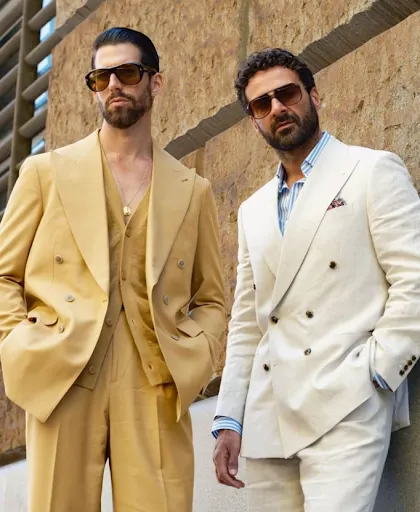
Learning how to fold a pocket square takes five minutes, and five folds cover every event on the calendar: flat, one-point, two-point, puff, and rolled puff. Formal events reward sharp folds; relaxed ones reward soft folds. Here is each one, step by step, ending at the bespoke tuxedo Dubai pocket the flat fold was made for.
Before You Fold: Fabric Changes Everything
The suit sets the base colour and the formality; the tie answers it. Navy and mid-grey are the easiest bases because they sit mid-tone, which leaves room for the tie to go darker or lighter. Fewer men wear tailoring at all now, which raises the reward for wearing it well: a 2023 YouGov survey found only 7% of workers, and 8% of male workers, still wear business attire to work.
That number matters because when tailoring is a choice rather than a uniform, the pairing you choose says more about you than it used to. Dress the base well, and the tie decision gets easier every morning after. Buy ties after suits, never before, and let each new tie earn a place against at least two of them.
How to Fold a Pocket Square: The Five Classics
Each fold below runs from flat on a table to finished in the pocket. Practise on linen first, because it forgives and holds.
1. The Flat (Presidential) Fold
If you have searched how to fold a pocket square presidential style, this is the flat fold under its formal name. Fold the square into a rectangle slightly narrower than your pocket, then fold up from the bottom until a narrow band remains. Slide it in so a clean horizontal line shows above the welt. It is the only fold for black tie, and the safest for interviews and boardrooms.
2. The One-Point Fold
Fold the square diagonally into a triangle, point up. Fold the left and right corners inward to narrow the base, then insert with the single peak showing. It reads classic without the starch of the flat fold, which makes it the default for wedding suits for men and the parties around them.
3. The Two-Point Fold
Start as the one-point, but offset the first diagonal fold so the corners miss each other and form two peaks. Narrow the base the same way and insert. The staggered points add movement, suited to receptions where the flat fold feels stiff.
4. The Puff Fold
Pinch the square at its centre and lift, letting the corners fall. Circle the fabric loosely with your other hand, tuck the corners under, and seat it rounded side up. Silk makes the best puff, and no two attempts look identical, which is part of the charm.
5. The Rolled Puff
For anyone wondering how to fold a pocket square rolled style: make the puff, then roll the gathered edge gently back on itself before tucking, so the visible cloud gains a soft rim. It is the most relaxed of the five, at home with a blazer and an open collar.
Five folds, one square, every occasion covered. Master the flat and the puff first, and treat the rest as variations.
Matching the Fold to the Occasion
Formality maps cleanly onto folds. Flat for black tie and interviews, one-point for weddings and business, two-point for receptions, puff and rolled puff for dinners and anything with a blazer. The suit pocket square fold you choose should sit a touch below the jacket’s formality, never above it.
Plenty of guides on how to fold pocket square shapes overcomplicate things, and the five above are genuinely enough. Never match the square exactly to the tie; let them share a colour family instead. A white linen square in a flat fold rescues any formal outfit, which is why it lives in the breast pocket of most men’s formal wardrobes.
Learn to fold a pocket square in under a minute, and it stops being an occasion skill and becomes a habit. The pocket does half the work, so a jacket cut with a clean, well-placed welt makes every fold look sharper.
Atelier Notes: The Pocket Behind the Fold
At Vogue Atelier, the breast pocket is drawn on the pattern rather than stitched where a factory block puts it, because each jacket starts from a new pattern per client. Welt height and width follow your chest and shoulder proportions, which is why the same fold reads differently on different jackets.
Grooms are welcome to bring the square they plan to wear to fittings, so pocket and fold get settled together well before the wedding morning. A fold can be practised in a mirror. The pocket has to be cut right the first time.
Who Should Bother With Pocket Squares, and Who Should Not
If your tailoring comes out for weddings, dinners, and client-facing days, a pocket square is the cheapest upgrade available. If your office runs to polos and chinos, a square will look like fancy dress, and the money is better spent on shirts. Grooms and wedding parties should treat it as near-mandatory, because it photographs for decades.
Everyone else can own one white linen square and stop there without guilt.
Points, Puffs, and Knowing When
A single square, five folds, and a pocket cut at the right height cover every event you will meet. The pocket itself matters more than most guides admit, which is an argument for tailoring built around your proportions. Call or WhatsApp +971 54 305 0458, email hello@vogue-atelier.com, or get in touch with Vogue Atelier, and the team will handle the pocket while you handle the fold.
Frequently Asked Questions
What size should a pocket square be?
Between roughly 30 and 42 centimetres square. Smaller silk squares hold a puff better, while larger linen squares hold structure in a flat fold.
Can I wear a pocket square without a tie?
Yes, and it works hard there. With an open collar, the square becomes the main detail on the jacket, so choose it with the same care you once gave the tie.
How do I keep a silk square from sinking into the pocket?
Fold a base slightly wider than the pocket opening so friction holds it, or rest the square on a folded tissue at the bottom of the pocket. A pocket cut to proper depth also helps.
Do pocket squares work with a tuxedo?
Yes, in one form only: white linen or white silk in a flat fold. Anything more playful competes with the simplicity that makes black tie work.
Can the square be the same colour as the shirt?
White on white works and always has. Beyond white, keep a clear difference between shirt and square so the square reads as a choice.